
As we have explored in previous blogs what to expect when you first visit an osteopath and what the difference is between an osteopath and a chiropractor, this blog will go further into details about other important parts such as what does an osteopath do, how often should I see my osteopath and how much does an osteopath cost.
Firstly let us talk about what an osteopath does. As a musculoskeletal practitioner osteopaths are trained usually to Masters level and there is a good reason for this. We are often the first port of call for clients who are experiencing all sorts of pain from back pain to neck pain, shoulders to knee pain – sometimes it is just a slight ache, other times people are in extreme pain when they first see an osteopath. It is vitally important therefore as the first port of call that the person you see can accurately diagnose you and make sure that you are safe to treat with manual techniques and hands-on therapy and that you don’t need to see a medical doctor for further investigations such as scans or blood tests. The first thing to know is to be reassured that you are in safe hands when you choose to visit an osteopath in Newcastle.
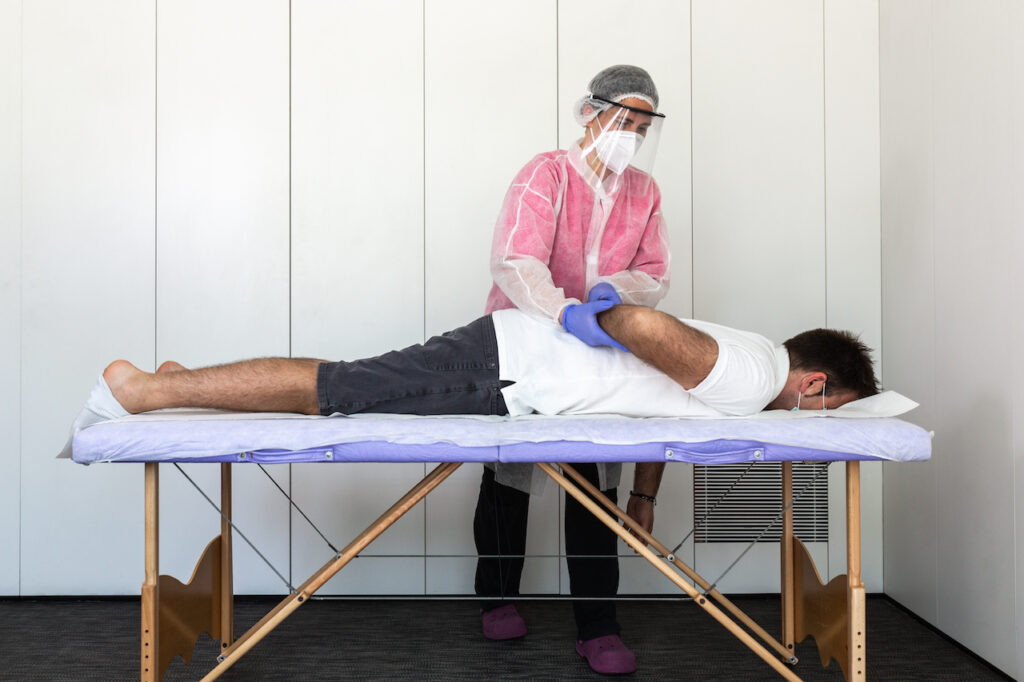
With the training that we go through our assessment process is second to none, and we have a high level of understanding about how the structure of the body works and how it goes together, this means that we then work out what needs to change in order for your body to improve, heal and become pain-free. As mentioned, the assessment process also allows us to ensure that anyone with a serious underlying cause to their pain is referred appropriately to the right person in order to facilitate speedy access to the right treatment.
Once we have diagnosed you and you are safe to treat, we will then begin to apply techniques which will help you to feel better. These techniques involve working on your soft tissues – this is your muscles and fascia. You probably know that your muscles are what move your body and hold our posture upright stopping us from toppling over, but perhaps you are less familiar with the term fascia. This is a layer of tissue which looks like cobwebs on dissection but acts like cling film and envelopes all our muscles and parts of our body to keep everything together and stop us falling apart! It works alongside everything else to make sure that we are functioning properly. The techniques involve working along muscles fibres or across them, and varying levels of pressure depending on what our goal is. For example, we may want to press more firmly to release a ‘knot’ or muscle tension, or more lightly to help facilitate inflammation moving through a damaged area.
We also use techniques which mobilise the joints. When we mobilise them for you, this is called passive articulation which means that you are not using any of your muscles to do the movement. This allows the joints to become more flexible, break through restrictions and improve synovial and fluid dynamics helping the joint provide the conditions needed for recovery and healing to take place. This passive movement also affects the muscles and helps them to start to relax and find a better resting length and release tension. There are lots more physiological processes which help aid improved functioning including to help reset the nervous system input to the joints and muscles.

One of the most famous techniques which people may know about relating to osteopathy is spinal manipulations also known as ‘adjustments’. This is the quick short movement directed at a restricted spinal segment which may induce a ‘popping’ or ‘crack’ and is synonymous with people’s expectations. The technique is incredibly safe, and there are rarely any adverse reactions. In fact, most people experience a rapid relaxation and reduction in pain at the area the adjustment is applied, meaning it is a very effective and reliable technique to help people to feel better fast.
Osteopaths in Newcastle aim to help people get better as quickly as possible. As such we do not expect our clients to buy into huge treatment plans which can turn out very expensive. Whilst clients want to have an idea about how long they might need treatment for, and this can be estimated based and planned for, you will almost certainly find that each appointment you are reviewed to see how you are getting along and whether or not you need another treatment. Sometimes we only see a client two or three times, other times we may see them for much longer. It all depends on the individual, what’s going on, their lifestyle and environmental factors. Some clients prefer to keep on top of their postural or sports stresses and strains and come for preventative or maintenance treatment, but this is entirely their choice and something discussed with their osteopath at the time.
At Osteopathy and Therapy both in Team Valley, our prices are the same. Our initial consultations are £60 for osteopathy and £35 for follow-up. This is fairly standard for osteopathic consultations although depending on where in the country you are will affect what you pay, as you can imagine in London expect to pay a lot more! The cost of seeing a private practitioner is something that you have to weigh up for you. With long waiting times and no hands-on treatment becoming the norm in NHS musculoskeletal services, getting seen often within a few days of making your appointment and starting treatment holds a lot more value than the cost of seeing a private practitioner such as an osteopath.